
Rhythmic dictation is a skill that is overlooked in the Primary school setting. We think it is too hard for students or we don’t have the confidence to teach it.
I have created a levelled approach that will turn that around.
My rhythmic dictation book has everything you need to teach students how to hear and notate rhythms. The program is designed for the beginner through to more advanced students. In my school, I use this program with students from Year 3 to Year 6 (8-13 year olds), but it could be used for any age depending on your setting and needs.
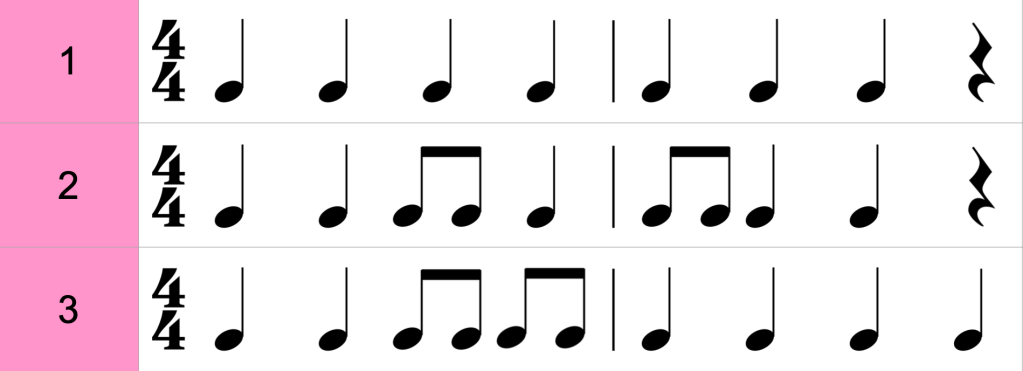
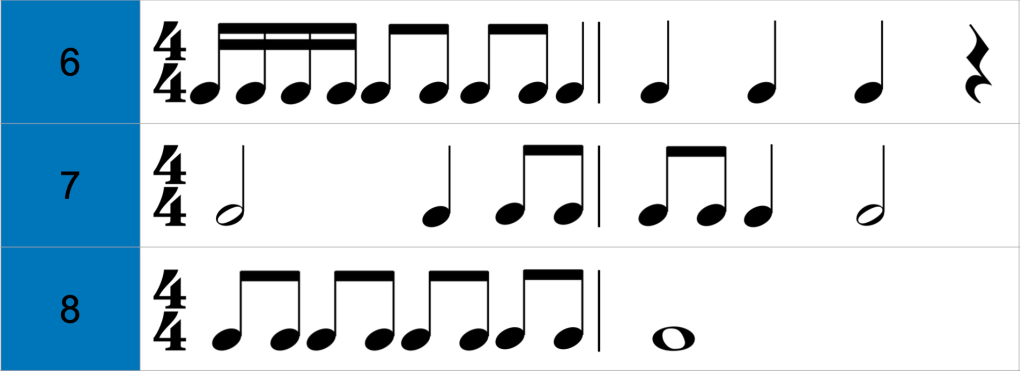
The first half of the book contains 6 different sets of rhythms ready for the teacher to play. Each set contains 12 different exercises, gradually increasing in difficulty. I recommend using a drum or metronome to keep a steady beat. Then use a piano or keyboard to play the rhythms. I play each rhythm 3 times with a small break in-between. This allows students time to hear the rhythm and start notating it. Most students won’t get the whole rhythm correct and notated in the first listen.
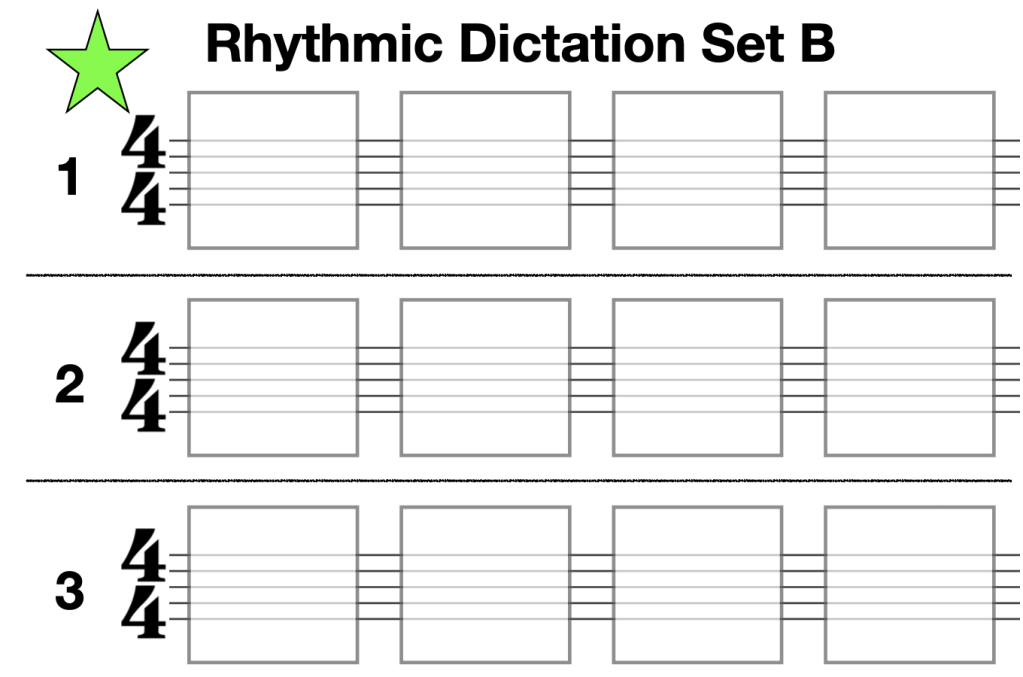
The second half of the book contains the student worksheets. Again, these are levelled to help students learn how to write the rhythms correctly. The worksheets start by using boxes that represent each crotchet beat in a bar. They then progress until students are able to write the rhythms including time signature and barlines.
I do rhythmic dictation as a small part in my aural and theory component of my program. We do 3 exercises a lesson so I don’t overwhelm them. It also gives me an opportunity to see how the students have gone and tailor my feedback and focus for the next lesson. For instance, if they aren’t colouring in note heads on crotchets or quavers, I can remind them before we do the next set.
I hope you enjoy this resource.
Happy rhythms!
Danielle x
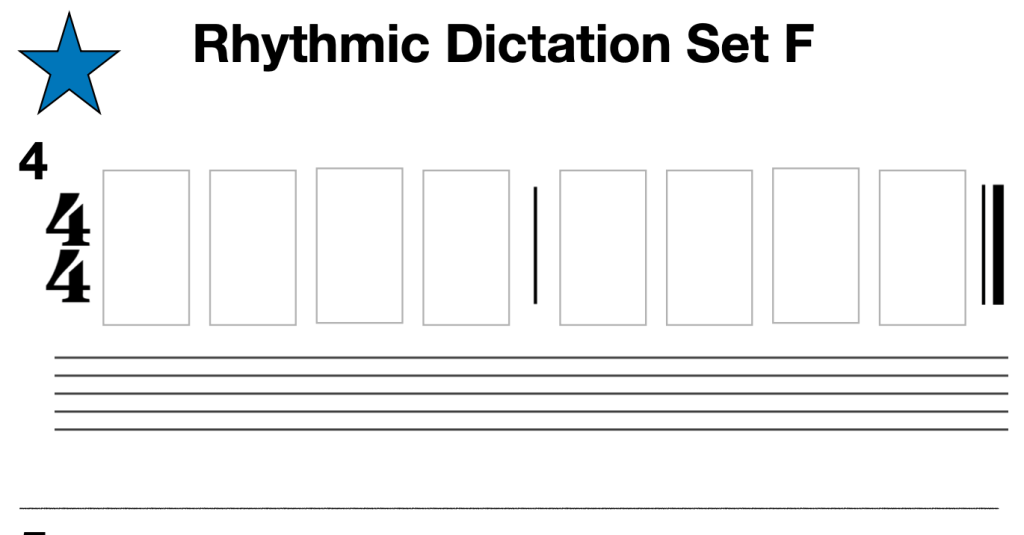
More advanced student worksheet

 The Music Spark